
The Invisible Black Experience: A True Story of Bias, Fear, and Restraint
This story is a true account of the invisible Black experience—what it’s like living inside the skin of a Black man in America. I don’t share this to provoke feelings, but to bring awareness to moments that are too often dismissed or unspoken.
The Invisible Black Experience on a Seemingly Normal Day
On Saturday, March 7th, 2020, I went into Shoppers Food Market to grab a few things for Sunday dinner. My two male friends and I planned to cook for the ladies in our lives. After walking into the vegetable aisle, I began preparing to stuff some peppers with salmon. While I was focused on selecting the perfect peppers, a white man approached on my left, attempting to reach for some.
Admittedly, I was hogging the space. My cart blocked the aisle, and I stood squarely in front of the produce. I said, “My bad bro,” and shifted my cart and body to give him space. Yet, he said nothing. He moved around to my right, so I moved left to give him better access. Then, he crossed in front of me, brushing against me. I said, “Bro, if you need to get in here, all you have to say is excuse me.” Still, silence.
Escalating Racial Tension and the Emotional Toll
When he bumped me again while crossing in front of me, I reacted. I elbowed him in the back and repeated, “All you have to say is excuse me.” That’s when he finally spoke: “Your momma didn’t give you any home training.” I was shocked—not because of the words, but because I expected anger or aggression, not this backhanded judgment. I warned him to step away before I lost control, then I returned to choosing peppers.
Roughly fifteen seconds later, he crashed his cart into me. My mind ran through options: Let it go? Call the police? Hell no. I pushed him hard, sending him flying into fruit displays. His cart flipped. Produce scattered. He recovered and charged, but stopped short. Words flew. Two store employees broke it up. We went our separate ways. Still, I remained tense and shaken by the encounter.
The Invisible Black Experience When Police Intervene
Soon after, a police officer approached the man and asked if he was involved in an altercation. The man confirmed. The officer followed up, asking if he was okay. Once more, he said yes. Then, the officer asked who the other person was. Without hesitation, the man pointed—at me. The officer glanced over, placed his hand on his gun, and once again asked if the man was okay.
This is how it starts, I thought. I remembered the names: Eric Garner. Freddie Gray. Walter Scott. Tamir Rice. George Floyd. Each was a Black person whose day went tragically sideways. I repeatedly told myself, “Stay calm. Don’t react.” Nevertheless, my heart pounded with the sting of being viewed as the threat rather than the victim.
Emotional Impact of Being Invisible in Public Spaces
The white man told the officer, “We just had a misunderstanding. We both felt a little disrespected.” I was angry, but also grateful. That response might’ve saved my life. At checkout, we stood at neighboring registers. We glanced in each other’s direction but ultimately looked past one another. Then it hit me: the officer never asked me what happened. He never asked if I was okay. I had been assaulted. I had the right to press charges. But I felt… invisible.
Was he intentionally ignoring my presence in the produce aisle? Could the officer have seen me as an equal? Sadly, no one asked about my pain. Not a single person acknowledged my tears—tears of rage, despair, and the deep hurt of inequality. This is the invisible Black experience.

By Q. Edmonds
M.O.T.M StoryTeller
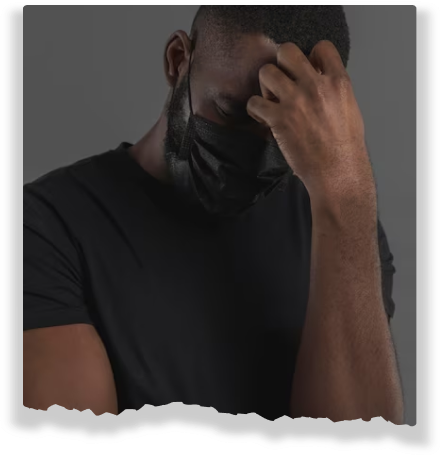
Stock image by Laura Williams
Learn More and Take Action
- Explore more personal stories and reflections on MOTM Vaultage
- Read a sociological view on racial invisibility and everyday bias